
Bring to the table win-win survival strategies to ensure proactive domination. At the end of the day, going forward, a new normal that has evolved from generation.
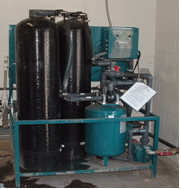
Originally, the first stage of the locomotive wash system consisted of three different wash arches. Circa 1970, this wash system included a wetting system to wet the locomotive, a second arch to apply soap and finally, an acid wash to serve as a surface brightener. The second original stage was a rinse arch system that included a 10,000 gallon storage tank, a 100 HP rinse pump, a rinse arch with galvanized nozzles and a 1970‘s vintage process controller.
Problem: The whole system was out-dated, expensive to run and maintain, and no longer performing efficiently. Many of the parts were hard to locate and expensive, while environmental issues long ago decommissioned the acid arch. The wetting portions of the wash performed very poorly. And the dated pumps were simply worn out. Finally, 1960’s vintage control panels were outdated and hard to maintain.
Solution:
A comprehensive study was conducted of existing wiring in order to integrate the new control panels into the system
New stainless steel control panels were installed with new conduit and heavier wire to supply the proper amperage needed for the new pumps.
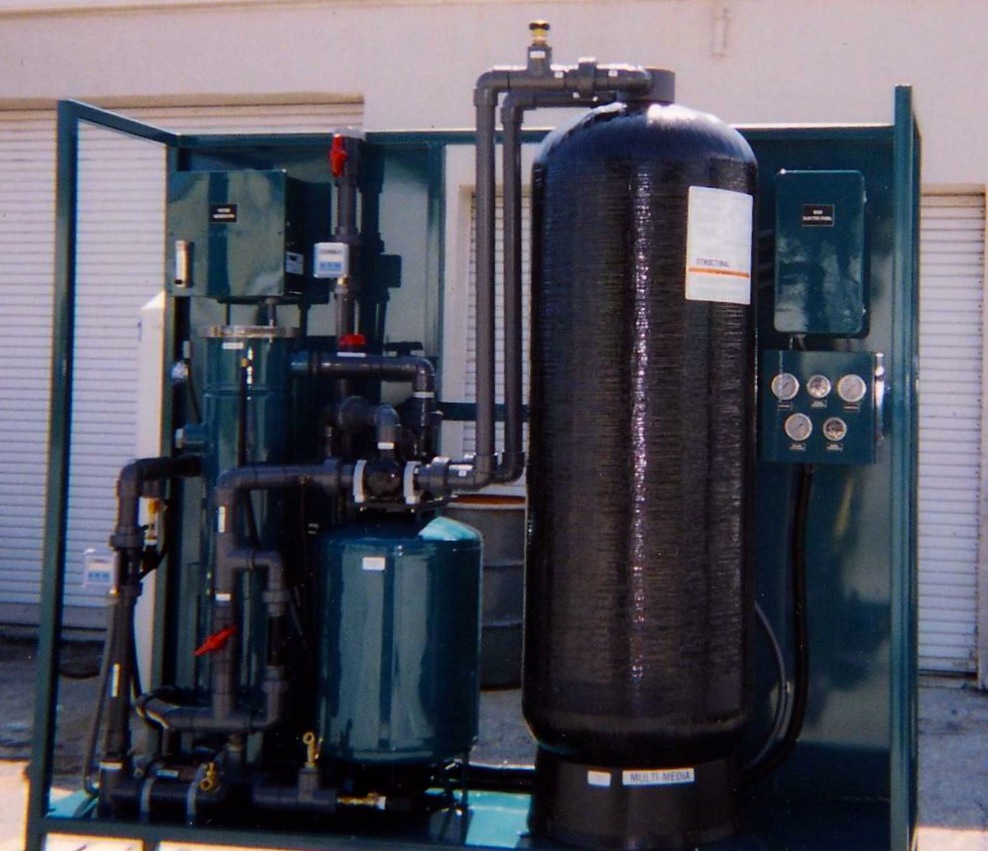
New high efficiency pumps were installed with new Schedule 80 PVC piping tied into the existing PVC pipe.
The existing nozzles were removed and replaced with re-engineered nozzles.
Due to budge and time constrains, this entire project, from initial engineering investigation to design to construction to start-up, was completed in just 90 days.
During that time, the maintenance personnel were able to continue working. The client reports that the locomotives washing is much more thorough and efficient.
If you are a professional detailer, you are passionate about cars and trucks – making them look their best for their owners. Detailing involves hand cleaning, polishing and protecting the interior and exterior of cars and trucks. For an average vehicle, detailers usually hand wash or pressure wash and generate a relatively limited amount of oily, dirty water.
With this small amount of water, you are probably wondering why you need an oil water separator at all. The answer is simple. Your municipality or state requires that any water discharged into the sewer system or waterway not contain any oils that could either contaminate their waste water treatment plant or harm the environment.
Oil Water Separator Systems
In most locations, we can usually recommend a simple oil water separator system to satisfy even the tightest sewer restrictions. Our above ground stainless steel parallel-corrugated plate oil water separators will remove essentially 100% of all free and dispersed non-emulsified oil droplets larger than 60 microns in diameter with a specific gravity of .90 or less.
Coordination with Local Environmental Officials
If you are building a new facility, we will work with you to develop a simple, cost-effective system and coordinate with the local sewer authority or environmental officials to get everything approved.
We can provide analysis, which indicates that, at the calculated overflow rate, the separator will be provided with the required square feet of projected plate separation area to achieve the specified performance under laminar flow (i.e. Reynolds Number of less than 500) conditions. If required, calculations signed by a registered professional engineer can be provided for an additional fee.
Leasing Programs
These days, preserving capital and existing lines of credit are very important to many small and large businesses alike. We partner with Crest Capital to offer flexible, Application-Only leasing programs. It is quick and easy to apply. » Apply Now
Give us a call at 800-453-8639 to see if we can help you out.
Most heavy construction contractors have a range of equipment from bulldozers to trucks to cranes. What most construction sites have in common is that they are full of dirt so all working vehicles, whether they are tracked or wheeled, pick up a lot of solids.
Effective cleaning is important since too many solids can foul the equipment and shut down operations in one area. Work stoppage in one area can impact the schedule of another part of the construction project.
TYPICAL SOLUTIONS:
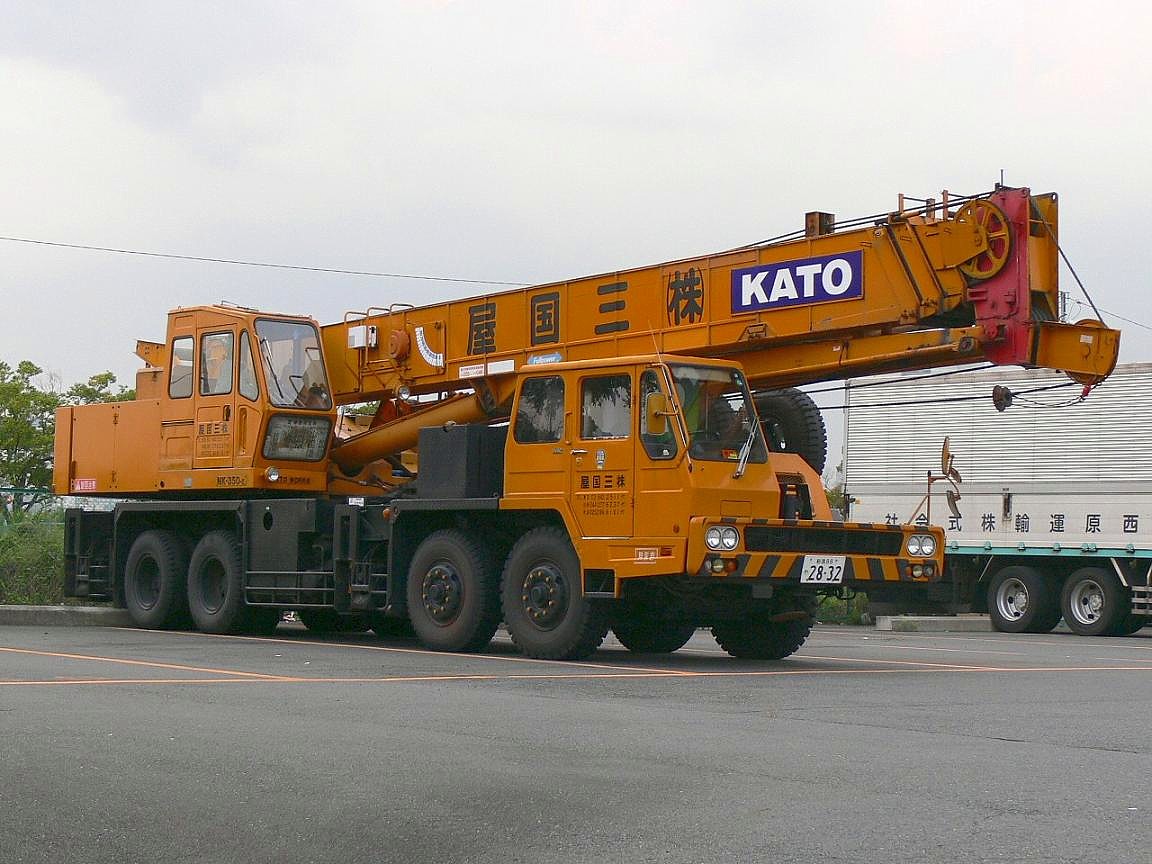
Truck Mounted Crane
Heavy equipment can usually be cleaned by two methods. High volume, low pressure demucking systems (Water Cannons) will quickly “coarse wash” the equipment and effectively remove heavy accumulations of dirt, sand, and mud – saving you time and water. Electric hot water pressure washer cleaning is used for grease and oil removal.
If you are building a new facility, our engineers will work with your architects to develop a comprehensive design for the wash facility, including a roofed wash pad, solids collection trench, equipment room, tank containment area, and total equipment package. Some facilities need completely self-contained water recycling systems since there are no sewer connections and rainwater detection and water level controls to eliminate the wash pad overflows.
In other areas where there are sewer connections, the wash water can be processed through our sewer discharge systems to remove solids, oil and grease and then discharged to the sewer.
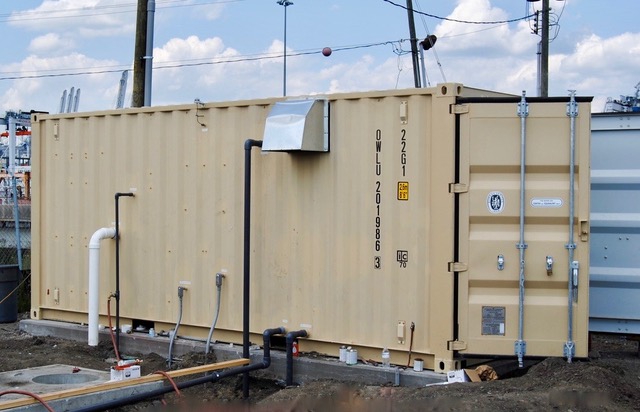
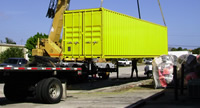
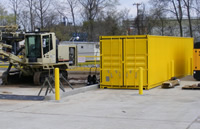
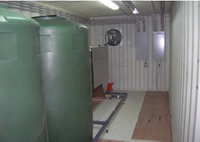
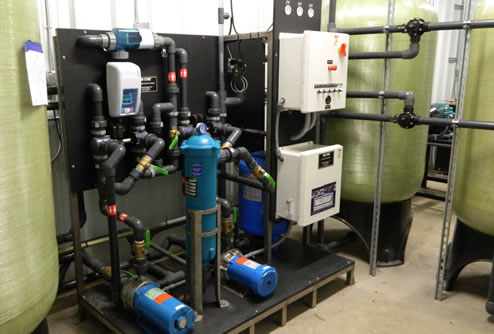
If needed, we can provide a WWMI TWP System which is a transportable wash bay equipment system containing all washing and recycling equipment needed to completely collect, store, treat, and redeliver the water for all cleaning requirements in a single room. These systems, which are usually housed in insulated, painted, and vented containers save on building costs, provide protection from the weather and allow you to move the equipment to a di fferent facility if the need arises.
The following list of equipment below can also be used for the construction industry where heavy equipment and cranes need to be cleaned often.
Forklift dealers and distributors need their forklifts to be clean and operational for their variety of customers. Although forklifts do not usually operate in areas where there are a lot of solids to clean off, they often come back to the distributor coated with grease, dirt and grime.
TYPICAL SOLUTIONS:
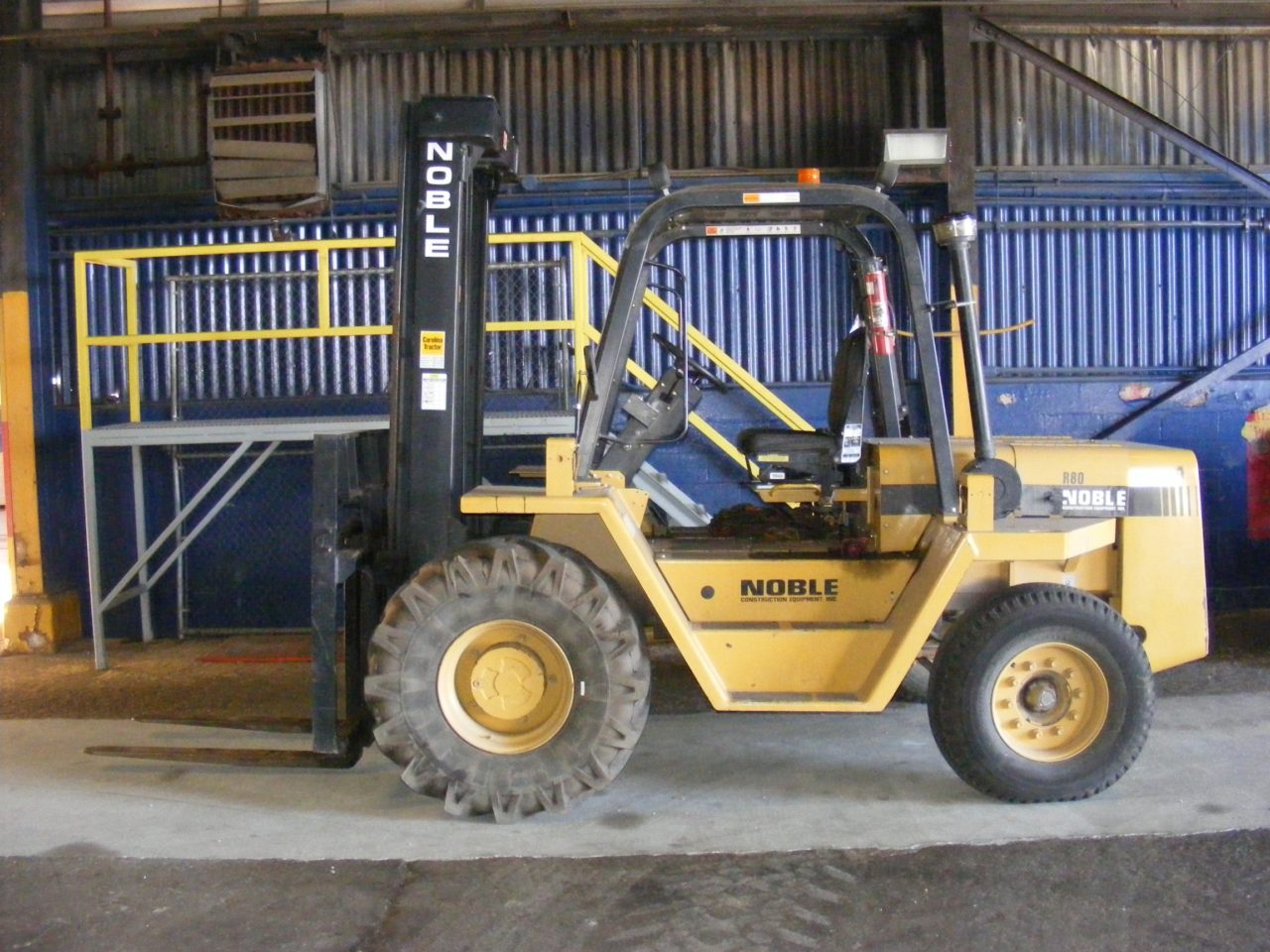
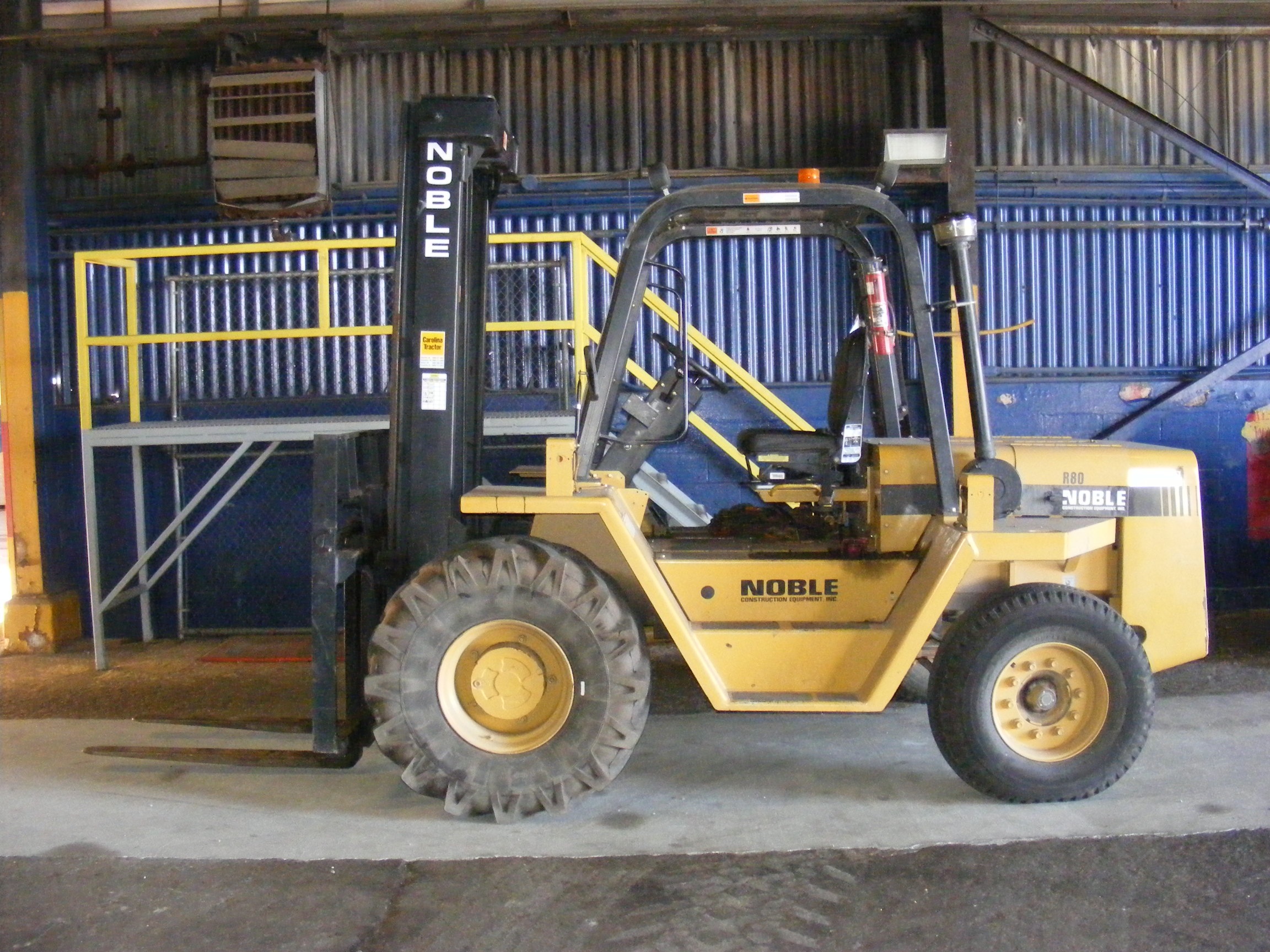
Fork Lift Cleaning Solutions Provided By Wash Bay Solutions.
Our electric hot water pressure washers clean forklifts very effectively. We provide our electrically heated pressure washers with a flow control feature on the wand so staff can reduce the flow from 5 gpm to 1 gpm to clean delicate parts without harm to surfaces. They also include a trigger gun activated start/stop control circuit with solid state time delay shutdown. Since they are electric, you do not need gas and HVAC permits which reduces installation time and cost.
Most forklift distributors are located near municipalities where there are both businesses and sewer connections. In these locations, the wash water can be processed through our sewer discharge systems to remove solids, oil and grease and then discharged to the sewer.
The SPT Series Integrated Sewer Pretreatment Systems have been specially designed for treating wash water from commercial and industrial washing operations. Each system includes a stainless steel clarifier oil water separator, an oil storage tank, a sump pump, a transfer pump, a level sensor for automatic operation and an ozone system for odor control. The clarifier section will remove all settable solids while the oil/water separator section will remove all non-emulsified oil from the waste stream.
The VSD Advanced Sewer Discharge Systems incorporate an extremely efficient patented filtration process utilizing fully automated solids filtration and activated carbon (GAC) polishing filtration to remove non-emulsified oil from the waste stream. We usually recommend this system in conjunction with the Sewer Pre-Treatment (SPT) Systems in areas where the sewer restrictions are very tight.
Some facilities need completely self-contained water recycling closed loop reclaim system since there are no sewer connections and rainwater detection and water level controls to eliminate the wash pad overflows.
If you are building a new facility, our engineers will work with your architects to develop a comprehensive design for the wash facility, including a roofed wash pad, collection trench, equipment room, tank containment area, and total equipment package.
Washing in a marine environment runs the gamut of cleaning and removing marine growth, loose paint and rust from vessels, to cleaning docks, platforms, and storage tanks. Most marinas and boatyards need their washing and reclaim systems to operate 24/7 with minimal maintenance. In southern climates, they also need the systems to operate with constant exposure to the heat, sun, and humidity. Unless they are inland, most marinas and boatyards have to deal with the deleterious effects of salt air.
TYPICAL SOLUTIONS:
For hull cleaning, marinas need to provide clean recycled water. Depending on your location and application, marina and boat yard operations will often need either a cold or electric hot water pressure cleaning for grease, oil and organics removal.
Wash Bay Solutions often designs closed-loop reclaim systems to capture, treat, store, and deliver clean recycled water to the pressure washers. If sewer connections are available, sewer discharge systems treat the processed water before
Total systems can incorporate ozone disinfection systems, fully automated filter valves for filter backwashing, PLC control of all filter functions, and all non-ferrous components and hardware.
They can also incorporate rain detection systems to manage excess rainwater in the collection system, and fresh water makeup systems to compensate for evaporation losses.
These complete wash systems are ideal for washing equipment and vehicles at sites without incurring any construction costs, delays, or permanent structures. Used on military bases, construction sites, and at any facility requiring transportability, these cost effective systems can be configured for a wide range of applications and up and running in a few weeks. Recycling wash water also eliminates EPA and local impact fees, reduces sanitary sewer costs, and water restrictions.
How Does the Re-Cyke® TWB System Work?
The complete system consists of a self-contained aboveground wash pad and an enclosed equipment room. The pad includes a 12” high ramped structure capable of handling up to 40 tons/axle and tracked vehicles, an integrated water collection system to isolate solids and divert liquids, and a solids wash-down feature. The enclosed equipment room sits adjacent to the wash pad and contains complete water recycling, high-volume demucking, and high-pressure washing equipment.
As vehicles are cleaned on the pad, the wash/rinse water collects beneath the pad and is transferred to the closed loop recycling system for treatment and reuse so there is no off-site discharging. The solids removed from the vehicle are automatically washed to a collection section for future removal and disposal.
STANDARD FEATURES:
Elevated Wash Pad with Ramp
Totally Transportable in Modular Sections
Designed for drive-through or in-out operation
Heavy steel I-beam support framework
Unique fluid/solid separation weirs
High Volume Demucking Equipment
Available in 10 tons/axle & 40 tons/axle
Enclosure:
40’ enclosure is steel, aluminum, or stainless
Power panel, receptacles and lighting
Automated fans/louvers or insulated with full HVAC system
Pre-plumbed and wired
Secondary containment for all fluids
Equipment Included in Enclosure:
Complete closed-loop water recycling system
Water management tanks with waste oil and solids storage
PLC-controller with remote monitoring and SCADA capability
Hot or cold water pressure washer
Optional high volume/low pressure Demucking system
Non-chemical water dis-infectiing ozone generator
Fully automated, requires minimal maintenance
All equipment UL/CSA listed
TWB SERIES SYSTEM SPECIFICATIONS
MODEL
TWB-5
TWB-10
TWB-20
TWB-35
FLOW RATE
1-5 gpm
1-10 gpm
5-20 gpm
5-35 gpm
RE-CLAIM SYSTEM
3/4 hp
1 1/2 hp
3 hp
3 hp
INLET
2”
2”
2”
2”
OUTLET
1”
1”
2”
2”
WATER STORAGE TANK VOLUME
500 GAL
1000 GAL
1000 GAL
1500 GAL
PRESSURE WASHER
4 GPM
650
700
750
KW (max.)
1.8
2.0
3.0
3.0
OZONE SYSTEM
Up to 32 grams of ozone per hour
CONTROL SYSTEM
Automatic, Manual or Off
ENCLOSURE
40’ Steel Enclosure, pre-plumbed and wired Automated fans/louvers or insulated with full HVAC system
POWER
Power panel, receptacles and lighting 208 / 240 V 1 ph 208 / 240 / 480 V 3 ph
The RPS Series reclaim system pumps water through automated filters and an ozone injector system to clean and disinfect the water.
Why Do I Need a RPS System?
The RPS Series Reclaim System is for in-bay automatic car washes. Recycling wash water reduces your fresh water usage as well as eliminates EPA and local impact fees, reduces sanitary sewer costs, and water restrictions. Our RPS systems are designed for petroleum industry car washes.
How Does the RPS System Work?
The RPS Series reclaim system pumps water through automated filters and an ozone injector system to clean and disinfect the water. The cleaned water is stored and constantly re-circulated to remain odor-free for delivery to the car wash upon demand. Filters automatically purge solids to eliminate the need for manual cleaning. The system requires minimal periodic maintenance. It is ideal for retrofitting existing car washes as a turnkey package with compact water storage tanks installed along the wash bay wall or in an adjacent room.
Stainless Steel Inlet Compartment – The water is pumped into the system through a non-clogging diffuser pipe to distribute the flow. The inlet chamber is designed to reduce suspended solids, dissipate energy and begin separation.
Sump Pump – Water is pumped into the system via an air diaphragm sump pump.
Inclined Plates – Inclined plates above the sludge chamber catch suspended particles as the water stream moves into the separation chamber.
Separation Chamber – After the water travels up the inclined plates, it flows into the stainless steel separation chamber containing the coalescing media.
Coalescing Media Packs – The high efficient coalescing pack in the separation chamber further slow the water velocity so oil drops out of suspension and clings to the media. This media will remove 99% of free oil droplets 20 microns or larger.
Oil Skimmer – The oil that has dropped out of suspension is then skimmed off the top of the separation chamber and into a tank for easy removal.
Baffles – An underflow weir will prevent re-suspension of solids while an oil retention weir will keep the oil in the separation compartment.
Ozone Generator – The water is injected with ozone to kill odor-causing bacteria.
Clean Water Chamber – The third stage is a clean water chamber where the clean water will flow out for reuse to the drain.
Float Control System – SPT Series Systems come with optional control systems for simple, automatic operation.
Through multi-pass filtration, the water and/or particulate can be removed form the oil and thus extend fluid life. Oil is cleaned continuously, minimizing oil disposal costs with ultra fine filtration.
Our Oil Recycling, Depth Filtration System is a high performance batch system, designed with the versatility to recycle virtually any type of Industrial oil and engineered for many years of dependable trouble free service. Depth Filtration Features: Restore Contaminated Oil Maximize Savings Minimize Disposal Oil Contaminants can have serious problems associated with water and/or particulate […]